Rain Gear & Layering: Staying Dry Is a System
Base, mid and shell layers that handle drizzle, downpours and sweaty climbs without leaving you chilled.
Ask anyone who camps west of the Cascades about rain gear and you will hear a version of the same lesson: no jacket keeps you perfectly dry all day. Work hard enough in steady rain and you will get damp from the inside, through sweat, or from the outside, through seams, cuffs and saturated fabric. The goal is not to stay bone dry. It is to stay warm while damp and to dry out quickly when you stop.
That is why experienced Northwest campers talk about layering systems rather than single garments. Each layer does one job well, and together they adapt to changing effort and weather.
The three-layer approach
Base layer: move moisture
The layer against your skin should pull sweat away and dry quickly. Merino wool feels warm when damp and resists odor over multi-day trips. Synthetic fabrics such as polyester dry faster and are generally more durable. Avoid cotton for anything you wear while active; it absorbs water, dries slowly and pulls heat from your body when wet.
Mid layer: hold warmth
Fleece is the classic Northwest mid layer because it breathes well and keeps insulating when damp. Synthetic insulated jackets are excellent for camp and rest stops. Down jackets are wonderfully warm for evenings but need to be protected from rain, so many campers keep a down jacket for inside the tent and a synthetic layer for wet outdoor use.
Shell: block wind and rain
The outer layer protects the rest from rain and wind. Its job is to keep water out while letting some of your body's water vapor escape.
Reading waterproof and breathability claims
Manufacturers use different tests and terms, so treat numbers as general guidance rather than precise comparisons across brands.
- Waterproof rating (often listed in millimeters) describes how much water pressure the fabric resists before leaking. Higher numbers indicate more resistance to driving rain and pressure points such as pack straps.
- Breathability describes how readily water vapor passes through. Higher breathability helps during sustained effort, but no membrane can keep up with heavy sweating on a steep climb.
- Construction: 2-layer, 2.5-layer and 3-layer describe how the membrane is protected. 3-layer shells tend to be the most durable; 2.5-layer shells are lighter and pack smaller.
- Durable water repellent (DWR) is a surface finish that makes rain bead up. When it wears off, the outer fabric "wets out," breathability drops and you feel clammy even if no water gets through.
Features that matter in a rain jacket
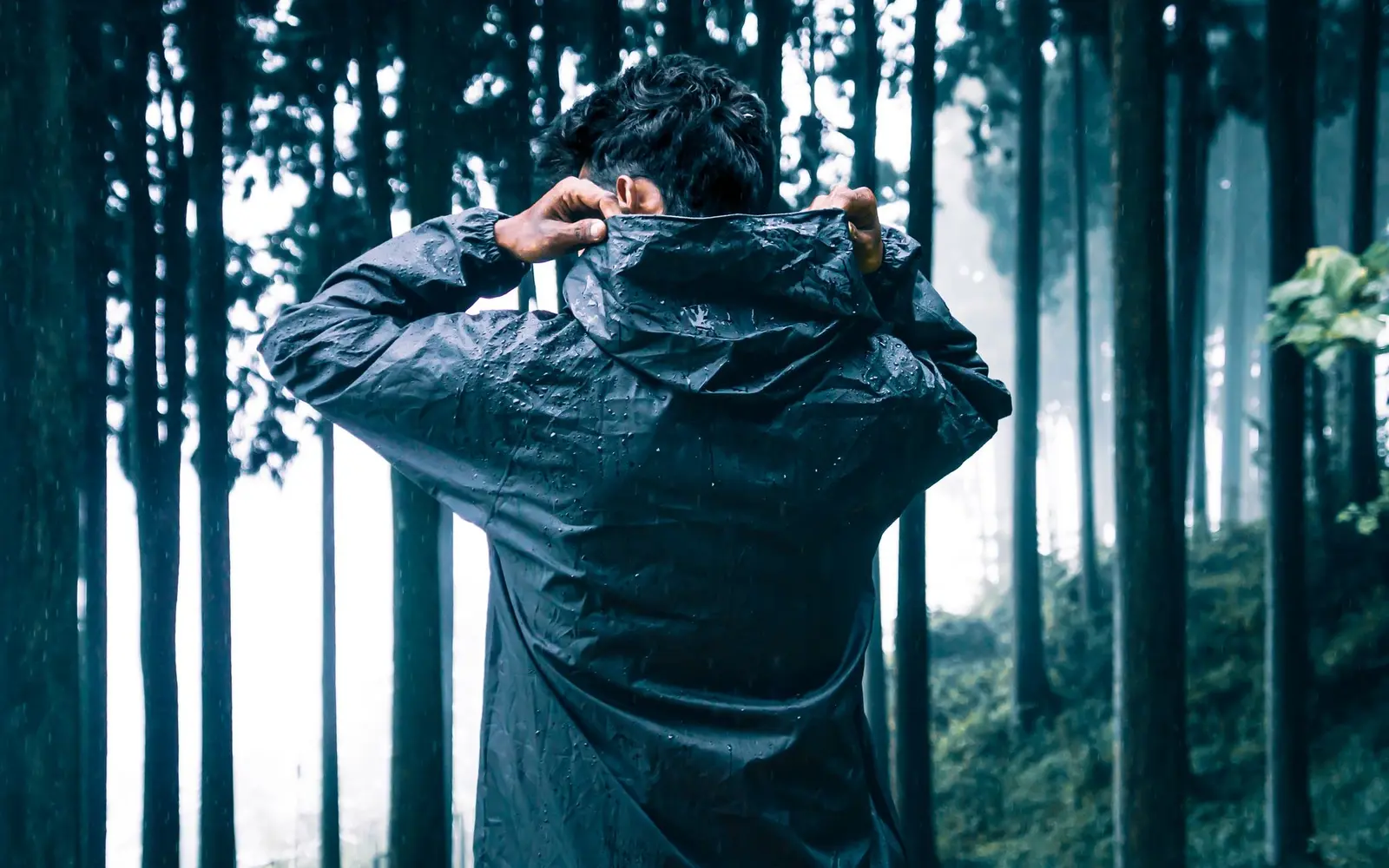
- A hood that adjusts at the back and sides so it turns with your head and has a stiffened brim to keep rain off your face.
- Pit zips or two-way front zippers for dumping heat on climbs.
- Fully taped seams and protected zippers.
- Cuffs that seal around gloves and a hem with a drawcord.
- Pockets placed above a pack hipbelt so you can use them while carrying a load.
- Enough length to cover the top of your pants when you lift your arms.
For campground use and short walks, a durable, slightly heavier jacket is fine. For long hikes, lighter packable shells are easier to carry, but they may wear faster under pack straps.
Legs, feet and hands
Rain pants are worth carrying for long wet days, cold shoulder seasons and sitting around camp. Side zippers make it easier to pull them on over boots. Some hikers prefer a rain kilt or skirt for better ventilation on warmer rainy days.
Feet are a matter of strategy. Waterproof boots keep feet dry in light rain and short puddles but take a long time to dry once water gets in over the top. Many experienced hikers use quick-drying trail shoes with merino or synthetic socks and accept wet feet, changing into dry socks at camp. Gaiters help keep mud and water out either way.
Light fleece or wool gloves with a waterproof overmitt work well. A warm hat and a buff or neck gaiter add a lot of comfort for little weight.
Start a climb slightly cool. If you feel comfortably warm at the trailhead, you will be soaked in sweat within ten minutes. Open vents early, slow your pace, and add layers the moment you stop.
Layering in practice: a damp day example
- Trailhead in drizzle: base layer and shell, vents open, hood up.
- Steady climb: shell unzipped or removed if rain is light; base layer only.
- Windy ridge or rest stop: add the synthetic insulated jacket immediately, shell over the top.
- At camp: change into dry base layers, add a warm insulating jacket and keep the shell on outside.
- Bedtime: dry sleep clothes only; hang damp layers under the vestibule or tarp.
Caring for rain gear
Dirt, sweat and sunscreen clog fabrics and wear down water repellency. Wash shells occasionally with a cleaner designed for technical outerwear, rinse well and dry them according to the label; gentle heat often revives the DWR finish. When water no longer beads, apply a wash-in or spray-on repellent treatment. Check seam tape inside the jacket for lifting edges, and patch small tears with gear repair tape before they grow.
Bottom line
Choose a base layer that dries fast, an insulating layer that works when damp, and a shell that fits over everything with good venting. Then learn to adjust constantly. Small, frequent changes keep you comfortable far better than one heavy jacket worn all day. Dress this way and the rain becomes part of the scenery rather than a reason to stay home.