Lighting, Navigation & Safety Basics
Headlamps, map-and-compass skills, first aid and emergency communication for foggy forests and short autumn days.
In the Pacific Northwest, the conditions that get people into trouble are rarely dramatic. Fog rolls in and hides a trail junction. A short autumn afternoon ends sooner than expected under a dense forest canopy. A phone battery dies in the cold. Simple, well-practiced habits around lighting, navigation and safety turn these moments into small inconveniences instead of emergencies.
Lighting: headlamps first
Every camper should carry a headlamp, even on day hikes. It leaves your hands free for cooking, setting up a tent or scrambling over roots on a dark trail.
What to look for
- Brightness modes: a low mode for camp chores and reading, a high mode for route finding.
- Red light mode: preserves night vision and is courteous at shared campgrounds.
- Power source: rechargeable headlamps are convenient; models that also accept standard batteries are useful backups on longer trips.
- Water resistance: look for a rating that covers rain.
- Lockout: a lock function prevents the light from switching on in your pack.
Brightness numbers are measured under specific conditions and drop as batteries run down. Treat them as a rough guide, and know how long your light lasts on the modes you actually use.
Camp lighting
A lantern or a light that clips under your tarp makes evenings more pleasant and saves headlamp batteries. Choose warm color temperatures to reduce glare, and turn lights off when you are done to keep the night sky dark for everyone.
Navigation: layers of backup
Good navigation uses more than one tool, so a failure in one does not leave you stuck.
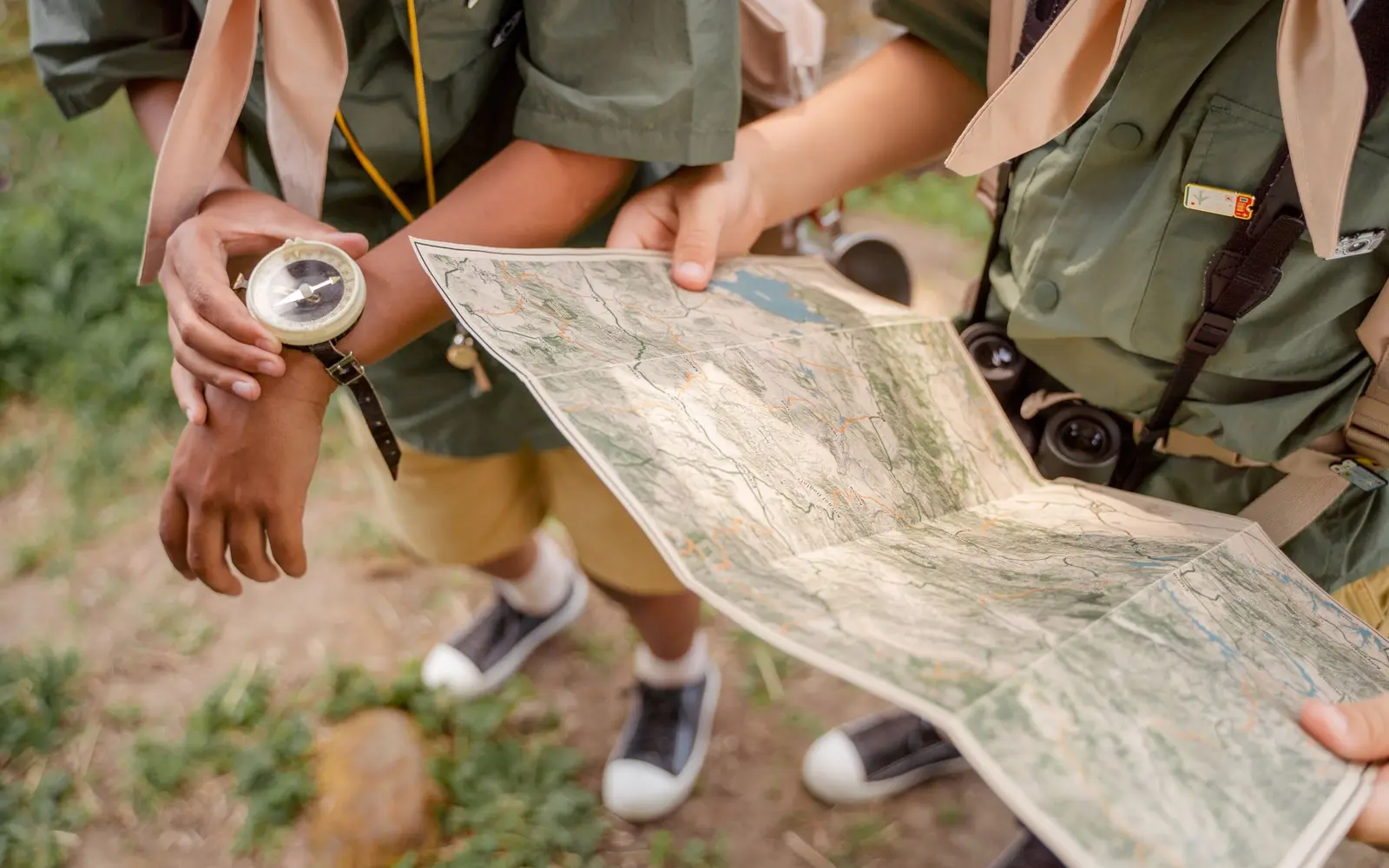
Paper map and compass
A topographic map of the area you are visiting, protected in a waterproof sleeve, never runs out of battery. Pair it with a baseplate compass and learn the basics: orienting the map, taking a bearing and following it. In our region, a compass with adjustable declination is useful, because magnetic north differs noticeably from true north in the Northwest.
Phone and GPS
Phone mapping apps are excellent tools if you prepare. Download offline maps before you leave, because many Northwest trailheads and forest roads have little or no signal. Keep the phone in airplane mode to save battery, carry a small power bank and protect the phone from rain.
Situational awareness
- Study the route before you go: junctions, water sources, turnaround points.
- Check your position at junctions and landmarks, not only when you feel lost.
- Note the time when you start and set a turnaround time.
- In fog or heavy forest, slow down and confirm more often.
If you realize you are unsure where you are, stop. Stay calm, think, observe and plan before moving. Backtracking to the last point you were certain of is usually the safest choice.
First aid
A first-aid kit is only helpful if you know what is in it and how to use it. Start with a pre-assembled kit and customize it for your group.
- Blister care: moleskin or blister dressings, tape, small scissors.
- Wound care: assorted bandages, gauze, antiseptic wipes, wound closure strips.
- Medications: personal prescriptions plus common over-the-counter items as appropriate.
- Tweezers for splinters and ticks.
- Elastic bandage and a lightweight splint for sprains.
- Emergency blanket and nitrile gloves.
Restock after every trip and check expiry dates each season. A wilderness first-aid course is one of the best investments a regular camper can make.
Communication and trip planning
Leave a trip plan with someone you trust: where you are going, your route, who is with you, your vehicle, and when to raise the alarm if they do not hear from you. Stick to the plan or update your contact if it changes.
Because cell coverage is unreliable in much of the backcountry, many campers carry a satellite messenger or personal locator beacon for remote trips. These devices can send an emergency signal from places phones cannot reach. Learn how yours works and test it before relying on it.
Weather and hazards specific to our region
- Hypothermia: it does not have to be cold. Wet clothing plus wind at moderate temperatures is a classic Northwest risk. Add layers early and eat regularly.
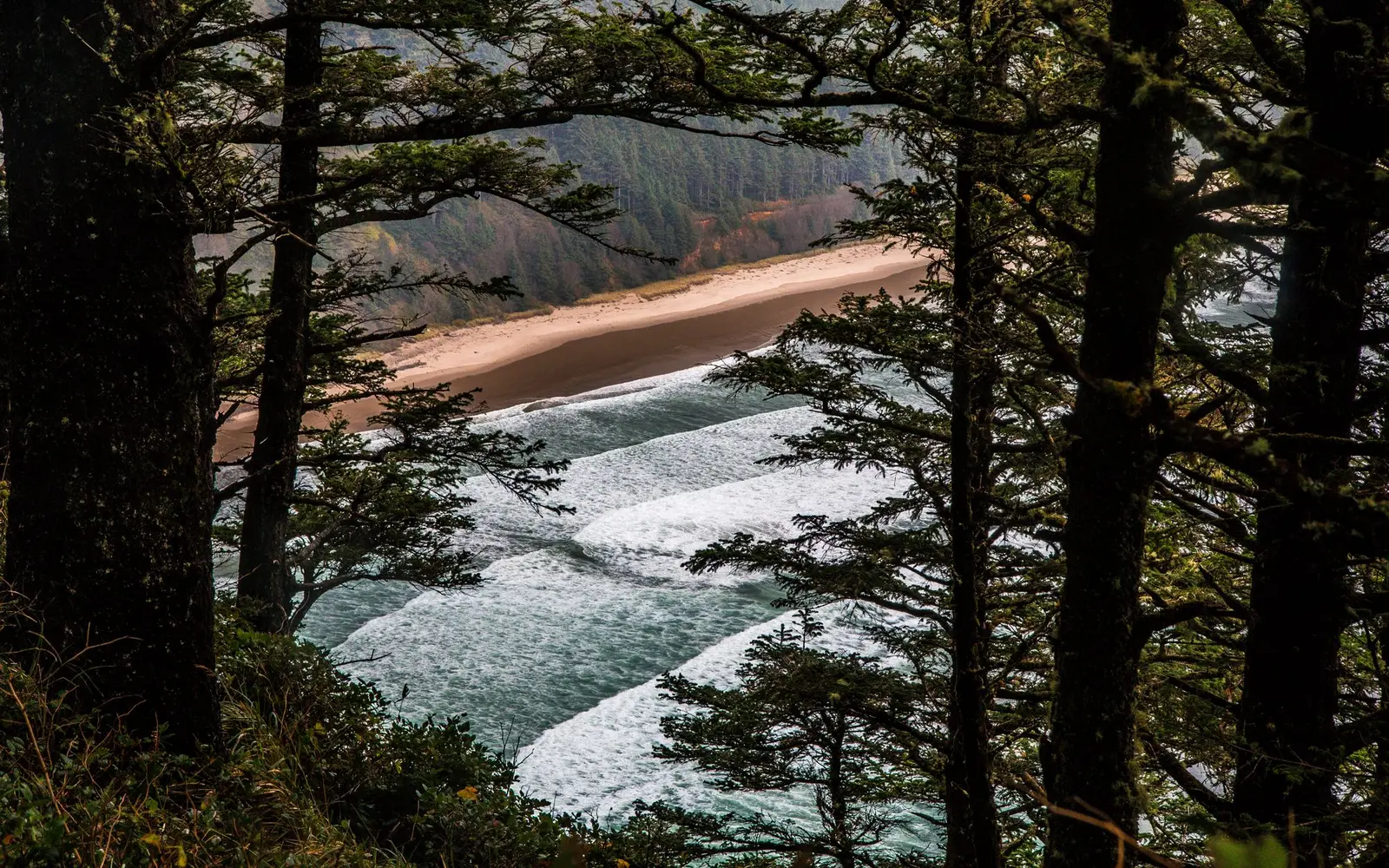
- Tides: on coastal beaches, check tide tables before walking around headlands, and never let rising water cut off your route.
- Sneaker waves and logs: stay off large drift logs near the surf and keep an eye on the ocean.
- Rivers: snowmelt streams can be cold, fast and higher in the afternoon. Cross carefully or turn back.
- Fire restrictions: summer and early autumn often bring burn bans. Check current rules before you light anything.
Practice at home
Skills fade if you never use them. Before the season starts, take your map and compass to a local park and practice orienting the map and following a bearing. Test your headlamp's battery life on the modes you use most. Open your first-aid kit and review each item. Walk through how to send a message on your satellite device. Ten minutes of practice at home makes these tools second nature when you are tired, cold and in the fog.
Putting it together
Pack a headlamp, a map and compass, a charged phone with offline maps, a first-aid kit and an emergency layer every time. Tell someone your plan. Watch the weather and the clock. None of this is complicated, but practiced together, these habits are what let you relax and enjoy the trip.